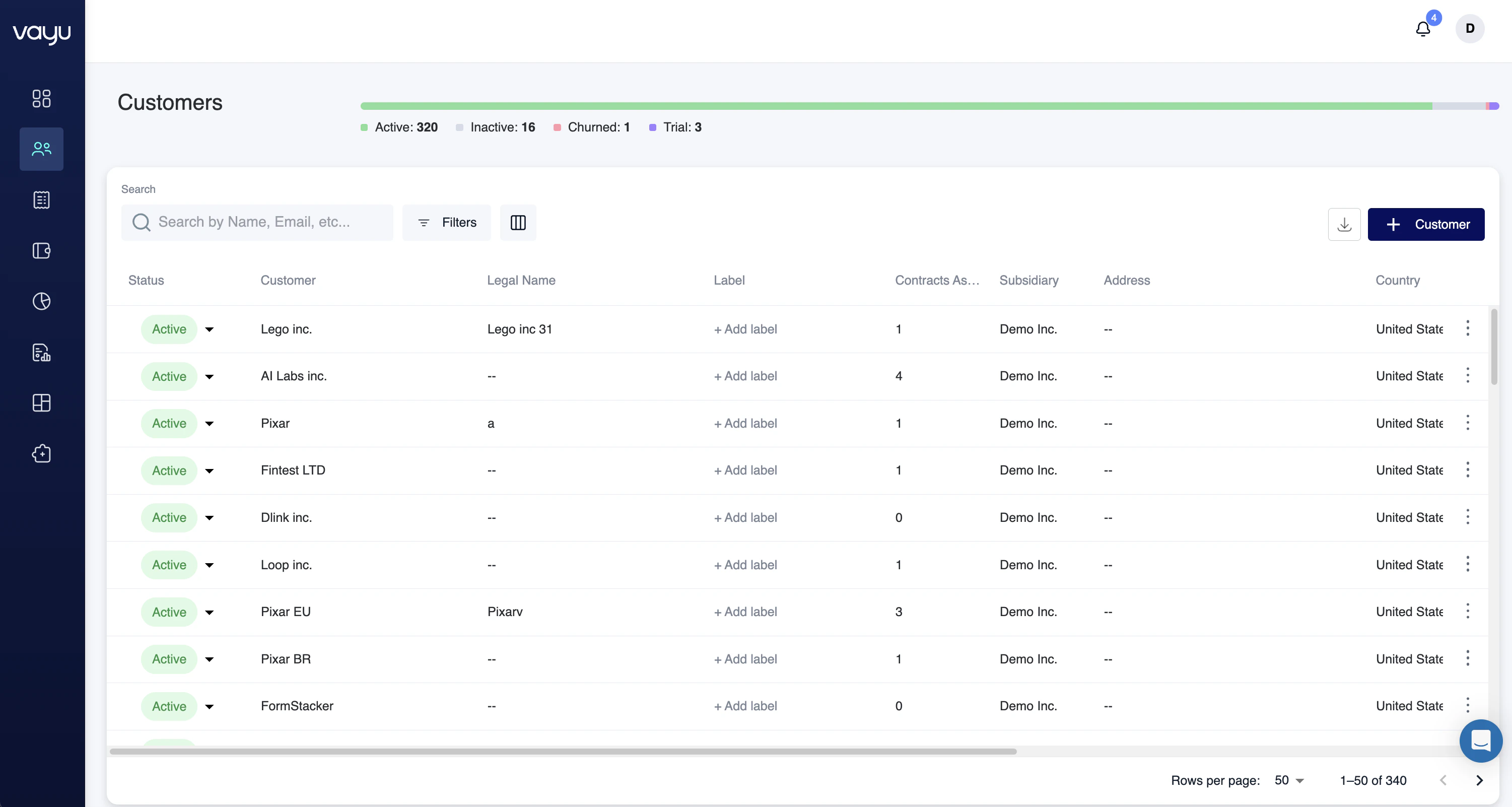
- Imported via CSV file
- Salesforce or Hubspot integration
- Adding manually - as described below
Company Details
General Information
The General Information section captures the legal and identifying information of the customer, including Name, Legal Name, and Tax ID. These fields define how the customer is referenced throughout the system and on billing documents.Address
The Address section stores geographic and mailing information, including Country or Region, State, City, Street Address, and Postal Code. This information may affect taxation, invoice formatting, and reporting.Contacts
The Contacts section allows you to associate one or more contacts with the customer account. Each contact record includes identifying and communication details such as Contact Name, Title, Phone Number, and Email. You may designate whether the contact should receive invoices by selecting the Send Invoice option. Additional actions allow you to add new contacts, manage existing ones, or remove contact records.Configuration
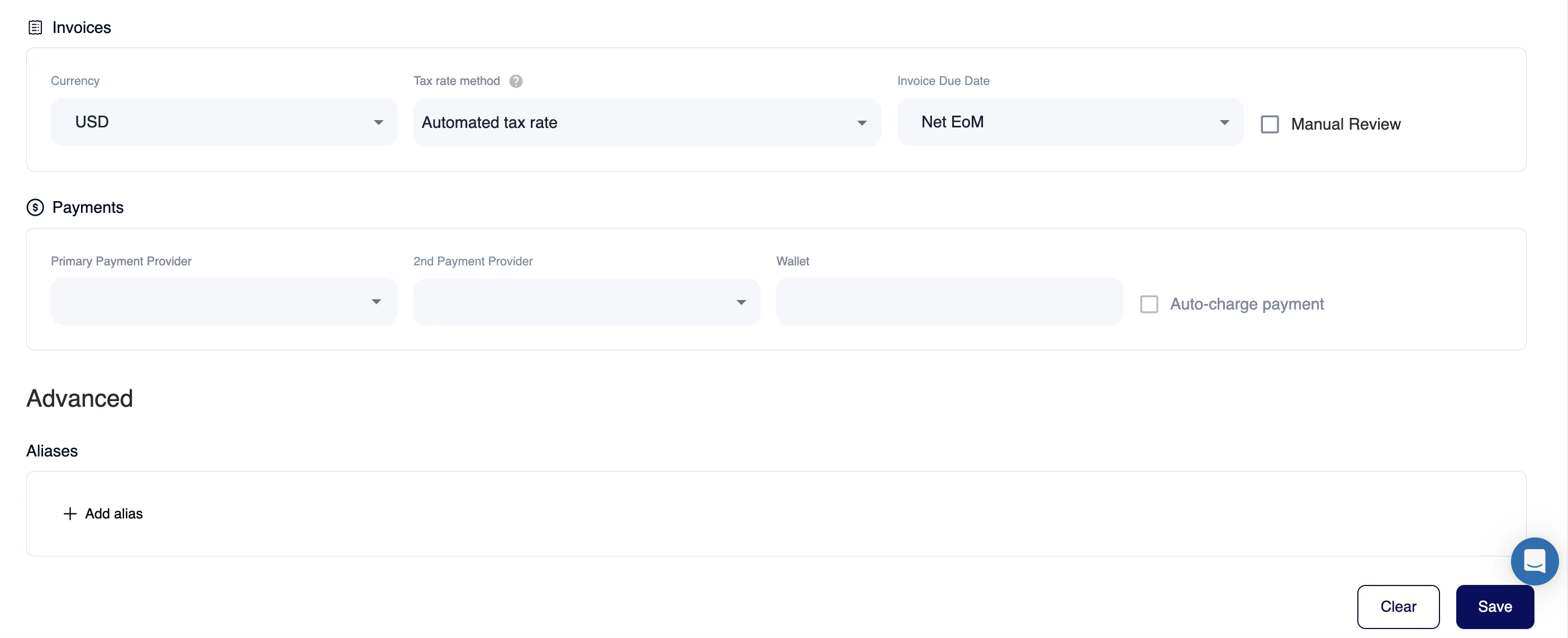
The Configuration section defines system identifiers and billing-related behaviors.External & Integration Identifiers
Fields such as External ID, CRM ID, NS Customer ID, and QB ERP ID are used to synchronize customer records with external systems and accounting platforms. These identifiers allow mapping between Vayu and integrated systems.Account Configuration
Within this section, you assign the customer to a Subsidiary, define the default Overage behavior, and select a Customer Type. These values influence how billing and contracts are applied to the account.Invoices